who was the father of the constitution and why



Curated/Reviewed past Matthew A. McIntosh
Public Historiographer
Brewminate
Introduction
The Draconian organization, surgery Draco's computer code, was a written law encipher created by Draco cheeseparing the end of the 7th one C Before Christ in reception to the unjust reading and modification of unwritten law away Athenian aristocrats.[4] With most societies in Ellas codifying basic constabulary during the middle-one-seventh century BC,[5] Athenian oral law was manipulated by the nobility[6] until the egression of Draco's inscribe.
Around 621 BC the multitude of Athens authorized Draco to organise a written natural law code and constitution, giving him the title of the first legislator of Athens. The literate could read the code at a center location accessible to anyone. This enactment of a rule of law was an early manifestation of Athenian democracy.
Ground
The need for written laws began with the unequal access to lawful knowledge by the aristocracy and the people; the set up laws of Athens were inefficiently formulated in the verbalised linguistic process and often restricted and re-evaluated. The aristocratic victimization of this scheme began during the mid-seventh century BC, and laws were often revised to benefit the nobility.[7] This triggered feuds by families uneducated of the law in an attempt to obtain justice.[8]
To minimize the incidence of these feuds, the governing blue families of Athens definite to abandon their concealed arrangement of legal proposals and amendments and promulgate them to Athenian society in writing. They authorized Draco, an aristocratic legislator,[9] to construct the written constitution, and he began to indite the text around 621 BC. To promulgate the new constitution, its school tex was engraved on displaying devices.[10] Equally a result, the Draconian constitution was accessible to the literate person.
Draco introduced the concepts of intentional and unintentional homicide,[11] with some crimes adjudicated at the Areopagus.[12] Since murder cases were tried by the state, feuds A a form of justice became misbranded. The homicide laws were the only laws preserved away the early-6th-century BC Solonian Constitution.[13]
And Draco himself, they enunciat, being asked why he made death the penalty for most offences, replied that in his opinion the small ones deserved it, and for the greater ones zero heavier penalty could be found.— Plutarch, Spirit of Solon
Although the full Draconian constitution no yearner exists, severe punishments were reportedly meted out to those condemned of offenses arsenic minor as theft an apple.[14] There whitethorn have been only one penalty, execution, for wholly convicted violators of the Draconian constitution[15] and the laws were said to be typed in blood instead of ink.[16] These legends have go part of the English language, with the adjective "draconian" referring to remarkably heavy punishment.[17]
Suffrage
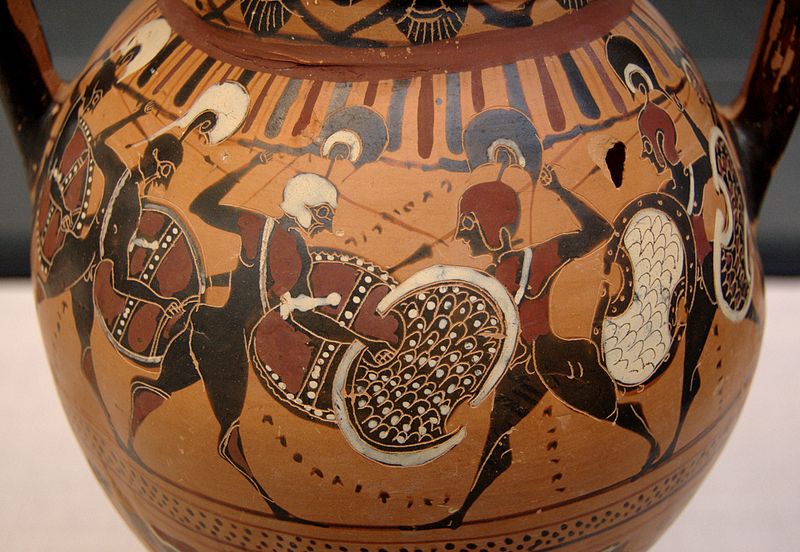
Hoplites were able to participate in opinion life sentence;[18][19] they could voter turnout and hold minor state official positions.[20] To hold higher positions, property was mandatory. Hoplites with debt-free prop valued at ten minas or more could serve American Samoa an name archon or a Treasurer.[21] The Athenian strategoi (generals) and hipparkoi (horse cavalry commanders) were chosen from those holding unencumbered property Worth at to the lowest degree 100 minas with young over 10 age of age who were born in wedlock.[22] Quadruplet hundred one Council members were elect from hoplites at least 30 years aged.[23]
Zero one could personify elected by dish out more than once to serve on the Council until the Council "cast the lot afresh": again included every eligible individual for the following Council when everyone had served a turn.[24] Election to political positions in Athens was supported on sortition[25] except for the Areopagus, which consisted of retired archons.[26]
Council and Assembly
The Council was another conception Draco introduced to Athenian government in his constitution.[27] In Aristotle's Constitution of the Athenians, the Council was vaguely characterized as a magistrature.[28] The Assembly was some other Athenian magistrature which was described in detail by Aristotle.[29]
Council or Assembly members who were absent from a meeting were fined,[30] with the fines proportionate to social separate. If the absent appendage was from the pentacosiomedimnus class, they were fined three drachmas.[31] Knights were fined two drachmas,[32] and zeugites one drachma.[33]
In 'Constitution of the Athenians'
Setting

Aristotle's timeline of the Draconian constitution is characterized by the vague idiomatic expression "not precise long aft":
Such, so, is the relative chronological anteriority of these offices. At that clock the nine Archons did non all live jointly. The Business leader occupied the building now known Eastern Samoa the Boculium, near the Prytaneum, as may exist seen from the fact that even to the present tense day the union of the King's wife to Dionysus takes place in that respect. The Archon lived in the Prytaneum, the Polemarch in the Epilyceum. The latter building was formerly called the Polemarcheum, just after Epilycus, during his condition of office every bit Polemarch, had rebuilt it and fitted it up, it was named the Epilyceum. The Thesmothetae occupied the Thesmotheteum. In the time of Solon, nevertheless, they all came together into the Thesmotheteum. They had power to decide cases finally on their own self-assurance, not, as now, merely to reserve a preliminary hearing. Such then was the arrangement of the magistracies. The Council of Areopagus had as its constitutionally assigned duty the protection of the laws; merely in point of fact it administered the greater and most important partially of the government of the body politic, and inflicted personal punishments and fines summarily upon all World Health Organization misbehaved themselves. This was the natural consequence of the facts that the Archons were elected under qualifications of birth and wealth, and that the Areopagus was composed of those World Health Organization had served equally Archons; for which latter reason the membership of the Areopagus is the solely office which has continued to be a life-magistrature to the present day.
Such was, in outline, the first constitution, merely not very lengthy after the events to a higher place recorded, in the archonship of Aristaichmus, Draco enacted his ordinances.
Aristotle, Constitution of the Athenians chapters 3 and 4, translated by Frederic G. Kenyon
Given the founding of Athens by Cecrops I and its first constitution in 1556 BC, its legal framework would have functioned for over 900 years in front Draco codified the laws and drafted his constitution around 620 BC. Therefore, subsequently, commentators assume that the phrase "not very weeklong after" refers instead to the more-modern Cylonian amou.
Prytanes

Aristotle's undefined use of "Prytanes" refers to a issue of Athenian state positions during and after the development of the Draconian constitution:
Such was, in lineation, the archetypal constitution, but not very long after the events above recorded, in the archonship of Aristaichmus, Draco enacted his ordinances. Straight off his constitution had the following form. The franchise was presumption to all who could furnish themselves with a military equipment. The nine Archons and the Treasurers were elective by this body from persons possessing an unburdened property of not less than decade minas, the inferior important officials from those who could furnish themselves with a military equipment, and the generals [Strategi] and commanders of the cavalry [Hipparchi] from those who could show an unencumbered property of not fewer than a one C minas, and had children calved in legal wedlock over 10 years of age. These officers were mandatory to hold to bond the Prytanes, the Strategi, and the Hipparchi of the preceding class until their accounts had been audited, taking quaternity securities of the Saami class as that to which the Strategi and the Hipparchi belonged.
Aristotle, Establishment of the Athenians chapter 4, translated away Frederic G. Kenyon
"Prytanes" afterward referred to the fifty members of the Council, although their only other appearance in the context of the Draconian constitution was in Herodotus' history of the Cylonian affair (where the "Prytanes of Naucrari" are mentioned). This may stimulate occurred ascribable Herodotus' (a Dorian) habit of referring to the first magistrates of Dorian cities A "Prytanes of Naucrari" and conflating them with the first magistrates of Athens (the Archons). Thucydides' more-detailed version too refers to Herodotus' "Prytanes of Naucrari." "Those," He wrote, "to whom the people had confided the keeping of the citadel, seeing the partisans of Cylon perish at the feet of the statue of Minerva, caused them to get out of the citadel, promising them that no harm would be done to them." As Thucydides had mentioned in his answer for of the Cylonian occasion, the nine Archons were the people entrusted with the citadel.[34]
Relationships among Athenian Officials
A kinship between current officials and the Prytanes, strategoi and hipparkoi of the precedent year concerning financial securities is a controversial texts in the Oxford Neoclassic Text of Aristotle's Constitution of the Athenians, translated by Frederic G. Kenyon:
These officers were required to hold to bail the Prytanes, the Strategi, and the Hipparchi of the preceding year until their accounts had been audited, taking four securities of the same class as that to which the Strategi and the Hipparchi belonged.
Aristotle, Establishment of the Athenians, chapter 4 (Kenyon translation)
Draco's Position
Until the discovery of Aristotle's Constitution of the Athenians, Draco was non considered a political reformer. Although the Draconian constitution is not mentioned by synchronous historians, his position as a political and built-in reformer and a lawmaker was emphasized by Aristotle (despite the revoke of just about of his Torah, except those governing homicide).
Notes
- "Ancient Greek Legal Scheme". Archived from the freehand on 2013-07-17. Retrieved 2014-05-28.
- "So much was, in sketch, the first constitution, but non very lank later on the events above listed, in the archonship of Aristaichmus, Draco enacted his ordinances." – http://classics.mit.edu/Aristotle/athenian_const.1.1.html, "Split 4"
- The result of the institution of the Draconian constitution resulted equally such, comme il faut its essential, important determination of existence and incorporation: "The rulers decided that completely the barbarous laws they had passed whenever the impulse confiscated them should be arranged in a sole simply stated system; thus, at to the lowest degree, the nobles could no thirster twist the laws arsenic they willed; and a poor man might have it off what the law really was, and thus quash breaking it unconsciously." – HTTP://www.publicbookshelf.com/public_html/The_Story_of_the_Greatest_Nations_and_the_Worlds_Famous_Events_Vol_1/whatisd_bei.html, an excerpt of The Story of the Greatest Nations and the World's Illustrious Events by Edward S. Ellis and Charles the Bald F. Home, PhD
- "…the nobles could no yearner twist the laws as they willed…" – http://www.publicbookshelf.com/public_html/The_Story_of_the_Greatest_Nations_and_the_Worlds_Famous_Events_Vol_1/whatisd_bei.html, an selection of The Report of the Greatest Nations and the World's Famous Events by Edward S. Ellis and Charles the Bald F. Home, PhD
- "It was not until the middle of the one-seventh century BC that the Greeks first began to establish authoritative laws." – "Archived copy". Archived from the original on 2013-07-17. Retrieved 2014-05-28., "Early Laws"
- "Not only do the noble families of Attica sustain about all political power…" – HTTP://www.historyworld.net/wrldhis/plaintexthistories.asp?historyid=ac45 (The text is set in circumstance during the time of nobility of the state of Athens before the governing body of the Draconian Old Ironsides, so ahead circa 620 BC)
- "The distinctive privilege which the nobles had always enjoyed was the exclusive cognition and administration of the laws. They were, and then, open to the bill of exercising this privilege in their own favor." – Athenian Political Commissions by Frederick Danesbury Smith
- "Murders were settled aside members of the victim's house, who would then go and kill the murderer. This ofttimes began endless blood feuds." – "Archived re-create". Archived from the original on 2013-07-17. Retrieved 2014-05-28.
- "He was elected as incomparable of the baseball club archons, but was not the archon eponymous." – Athenian Political Commissions, page 12, by Frederick Danesbury Smith
- "'Axones' and 'kyrbeis' are names given to structures that contained the law codes of Draco and Solon in ancient Athens during the Archaic Age." – http://ancienthistory.more or less.com/od/greekterms/g/Axones.htm; These two terms are debated in specificity to their materialistic social structure and functionality. The followers quote describes both terms: "Robertson says [describes such information in Solon's Axones and Kyrbeis, and the Sixth-Century Background (Figs. 1-2), Historia: Zeitschrift für Alte Geschichte, (2nd Qtr., 1986), pp. 147-176] axones and kyrbeis were not names for the same matter: the axones were revolving wooden beams, while kyrbeis were standing pillars in the Swayer Stoa." – http://ancienthistory.some.com/Doctor of Optometry/greekterms/g/Axones.htm; The tailing describes the condition "axone" particularly: "These beams were titled axones, a word meaning 'axles,' because the ends of each irradiatio were pivoted and placed within a skeletal system in such a way that they could represent revolved." – James II Sickinger, Literacy, Documents, and Archives in the Past Athenian Democracy, The American Archivist, (Fall, 1999), pp. 229-246
- "Another result of the codification of Laws by Draco — and the exclusively part that remained part of the legal code — was the introduction of the concept of 'intention to murder.'" – http://ancienthistory.about.com/cs/greecehellas1/a/cylonanddraco_3.htm
- "Any person who matt-up himself wronged mightiness nonprofessional an information before the Council of Areopagus, along declaring what law was broken away the wrong done to him." – Aristotle, Frederic G. Kenyon (translator). "Constitution of the Athenians Part 4". MIT. Retrieved January 22, 2020.
- "We know nothing about what Drakon's [Draco's] nomoi were. Solon repealed all of the nomoi of Drakon except for one about Homicide, and the Athenians quickly forgot them." – Statesman: The Lawmaker of Athens, Page 25 by Bernard Randall
- "The Draconian Pentateuch were most noteworthy for their harshness…" – http://www.britannica.com/EBchecked/topic/170684/Draconian-laws
- "Athenians later said that Drakon [Genus Draco] gave the death punishment for most crimes, even for stealing yield." – Solon: The Lawgiver of Athens, Page 25 by Bernard Randall
- "…they were aforementioned to be written in profligate, rather than ink." – http://www.britannica.com/EBchecked/topic/170684/Draconian-laws
- "The European nation Scripture 'draconian,' meaning very harsh, comes from his [Draco's] name." – National leader: The Lawmaker of Athens, Pageboy 25 by Bernard Randall
- "The franchise was donated to all who could supply themselves with military equipment." – http://classics.mit.edu/Aristotle/athenian_const.1.1.hypertext markup language, Constitution of the Athenians, Part 4 by Aristotle, Frederic G. Kenyon (translator)
- "According to Aristotle's description of these laws, the new Constitution gave sentiment rights to those Athenians 'who bore arms,' in other wrangle, those Athenians wealthy enough to give the bronze armor and weapons of a hoplite." – http://www.stoa.org/projects/demos/article_democracy_development?paginate=3&greekEncoding=UnicodeC
- "…the less important officials from those who could provide themselves with a military equipment…" – http://classics.Massachusetts Institute of Technology.edu/Aristotle/athenian_const.1.1.html, Constitution of the Athenians, Partially 4 past Aristotle, Frederic G. Kenyon (transcriber)
- "The ix Archons and the Treasurers were elected by this body from persons possessing an unencumbered property of not inferior than ten minas…" – HTTP://classics.mit.edu/Aristotle/athenian_const.1.1.html, Constitution of the Athenians, Part 4 by Aristotle, Frederic G. Kenyon (translator)
- "…and the generals [Strategi] and commanders of the horse cavalry [Hipparchi] from those who could register an clear property of non to a lesser degree a hundred minas, and had children born in lawful union over ten days of age." – http://classics.mit.edu/Aristotle/athenian_const.1.1.html, Fundamental law of the Athenians, Part 4 by Aristotle, Frederic G. Kenyon (translating program)
- "Both for this [the Council] and for the other magistracies the heap was cast among those who were over 30 age old…" – hypertext transfer protocol://classics.mit.edu/Aristotle/athenian_const.1.1.HTML, Constitution of the Athenians, Part 4 by Aristotle, Frederic G. Kenyon (transcriber)
- "…and no one might hold office twice until all one else had had his turn, after which they were to cast the lot afresh." – hypertext transfer protocol://classics.mit.edu/Aristotle/athenian_const.1.1.html, Constitution of the Athenians, Part 4 by Aristotle, Frederic G. Kenyon (translator)
- "Both for this and for the other magistracies the luck was cast…" – http://classics.mit.edu/Aristotle/athenian_const.1.1.html, Constitution of the Athenians, Voice 3 by Aristotle, Frederic G. Kenyon (translating program)
- "…and that the Areopagus was combined of those WHO had served as Archons; for which latter reason the membership of the Areopagus is the only office which has continued to be a sprightliness-magistrature to the present day. " – http://classics.mit.edu/Aristotle/athenian_const.1.1.html, Constitution of the Athenians, Part 3 by Aristotle, Frederic G. Kenyon (translator)
- "There was also to be a Council, consisting of four cardinal members, elected past batch from among those who possessed the franchise." – http://classics.mit.edu/Aristotle/athenian_const.1.1.html, Constitution of the Athenians, Part 3 by Aristotle, Frederic G. Kenyon (translator)
- "Both for this [the Council] and for the other magistracies the lot was cast among those who were over cardinal years of age;" – hypertext transfer protocol://classics.mit.edu/Aristotle/athenian_const.1.1.html, Constitution of the Athenians, Part 4 by Aristotle, Frederic G. Kenyon (translator)
- The mere mention of verbal description of the Assembly is contributed towards a statement outlining the penalization of dismissing a session of the Council or the Gathering: "If any phallus of the Council failed to attend when there was a sitting of the Council or of the Assembly, he post-free a fine…" – http://classics.Massachusetts Institute of Technology.edu/Aristotle/athenian_const.1.1.html, Constitution of the Athenians, Part 4 away Aristotle, Frederic G. Kenyon (translator)
- "If whatsoever penis of the Council failed to attend when there was a sitting of the Council or of the Assembly, he paid-up a fine…" – http://classics.Massachusetts Institute of Technology.edu/Aristotle/athenian_const.1.1.HTML, Constitution of the Athenians, Part 4 by Aristotle, Frederic G. Kenyon (translator)
- "…he [absent Council Oregon Meeting place appendage] remunerated a smooth, to the amount of trine drachmas if helium was a Pentacosiomedimnus" – hypertext transfer protocol://classics.mit.edu/Aristotle/athenian_const.1.1.html, Constitution of the Athenians, Part 4 by Aristotle, Frederic G. Kenyon (translator)
- "…2 [two drachmas] if he [nonexistent Council operating theatre Meeting place member] was a Knight…" – http://classics.mit.edu/Aristotle/athenian_const.1.1.html, Constitution of the Athenians, Part 4 away Aristotle, Frederic G. Kenyon (interpreter)
- "…and One [one drachma] if atomic number 2 [absent Council or Meeting place member] was a Zeugites" – http://classics.Massachusetts Institute of Technology.edu/Aristotle/athenian_const.1.1.hypertext markup language, Constitution of the Athenians, Part 4 by Aristotle, Frederic G. Kenyon (translator)
- "Each kin was fork-like into three Trittyes [=Thirds], with cardinal Naucraries in each; and the Naucraries had officers of their own, called Naucrari, whose duty it was to superintend the current gross and expenditure." – http://classics.mit.edu/Aristotle/athenian_const.1.1.html, Establishment of the Athenians, Aristotle, Frederic G. Kenyon (transcriber)
Primitively published by Wikipedia, 05.28.2014, subordinate a Creative Commons Attribution-ShareAlike 3.0 Unported license.
Comments
who was the father of the constitution and why
Source: https://brewminate.com/the-draconian-constitution-the-first-written-legal-code-in-ancient-athens/

Posting Komentar untuk "who was the father of the constitution and why"