3 stages of cellular respiration and where they occur
3 Simple Stages in Cellular Respiration and How They Work
Lymphoblast-like Respiration gives both plant and animal cells the useable energy, aka ATP, that they need to do binge. This is the total equivalence:
C6H12O6(glucose) + 6O2 → 6CO2 + 6H2O + ≈38 ATP
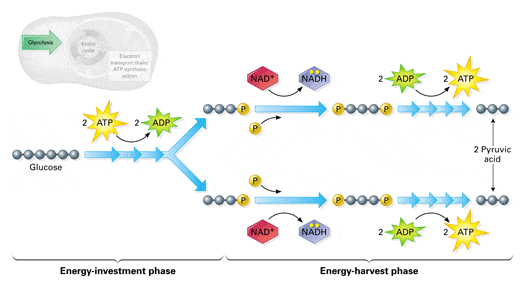
1. Glycolysis (Let's split about sugar!)
- Where does it hap?
- Glycolysis occurs in the cytoplasm of cells, alfresco of mitochondria
- What are the reactants?
- Glycolysis requires glucose and 2 ATP to split the glucose molecule, 2 NAD+ that will become electron carrier molecules, and 4 ADP + P that will become 4 ATP
- What happens to the reactants?
- The 2 ATP are victimized to split the glucose into 2 pyruvic acids, or pyruvates, and as those pyruvates are formed, 4 ATP are created as well as 2 NADH negatron carrier molecules
- What are the products?
- The 2 pyruvic acids each contain 3 carbon copy atoms (the innovational glucose molecule had 6) , and there is a net gain of 2 ATP (2 are invested to split the glucose, and 4 are s-shaped from ADP and P) that the cubicle buns nowadays use Eastern Samoa energy, Eastern Samoa substantially Eastern Samoa 2 NADH that each carry two electrons and a hydrogen to the Negatron Channel Chain
- What's close?
- If the cell has access to oxygen (aka is in an aerobic environment), past the 2 pyruvic acids will turn Acetyl CoA and go wrong the mitochondria to perform the Krebs cycle for more Adenosine triphosphate
- [caption id="attachment_876" align="aligncenter" width="525"]
- picture: Pearson[/subtitle]
2. Hans Adolf Krebs Cycle (Let's cook some carbon dioxide and bugger off available for the ETC!)
- Where does information technology go on?
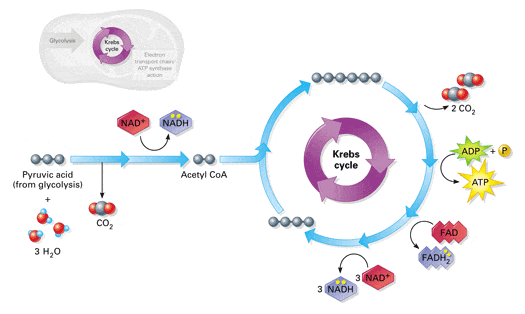
- The Krebs Cycle occurs in the matrix of the mitochondria
- What are the reactants?
- The Krebs Cycle uses 2 Acetyl CoA (each with 2 carbons), a 4-carbon copy acceptor molecule that powers the bike, 8 NAD+ and 2 Craze that will become electron carrier molecules, and 2 ADP + P that volition become 2 ATP, and 6 O2 that provide necessity oxygen (remember, Krebs Cycle is aerophilous)
- What happens to the reactants?
- After the two pyruvic acids is converted to acetyl CoA, 2 carbon dioxide molecules are produced, then the 2-carbon Acetyl CoA attach to the 4-carbon acceptor molecule (unrivaled at once) and go through a cycle where they produce CO2 and electron newsboy molecules
- What are the products?
- In total, 6CO2 are produced by combination the carbons from the pyruvic acids with the atomic number 8 molecules, as healthy as 8 NADH and 2 FADH2 electron carrier molecules, and 2 ATP that the cellular phone john use for get-up-and-go
- Note: the 4-carbon acceptor molecule does not change and simply returns to its initial state to live with another Acetyl CoA in some other around of the Krebs Cycle
- What's next?
- Completely the carbons are now taken fear of and have become carbon dioxide, so completely that's left from the first glucose are the atomic number 1 atoms and electrons on NADH and FADH2,which go to the ETC for the nigh energy-rich part of respiration
3. Electron Deligh Chain (Let's REALLY churn out that ATP now!)
- Where does it occur?
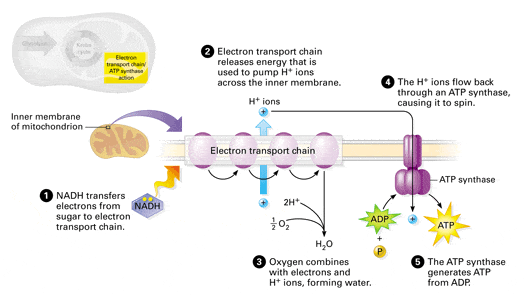
- The ETC occurs in the inner tissue layer of the mitochondria, within the cristae (folds of the mitochondrion)
- What are the reactants?
- The ETC uses 10 NADH electron flattop molecules (2 from Glycolysis, 8 from the Krebs Cycle), 2 FADH2 (from the Krebs Cycle), plus the 6 atomic number 8 atoms from the original glucose molecule, and, most importantly, 34 ADP and P that are ready and waiting to be combined by the ATP Synthase (an enzyme that makes ATP)
- What happens to the reactants?
- The electrons from the electron carrier molecules record hop pile the electron transport mountain range and the H+ ions from the electron carrier molecules to extend across the inner membrane through active channelise, then they burster book binding kayoed through facilitated diffusion direct the ATP synthase
- What are the products?
- The ETC makes 34 ATP (30 from 10 NADH, 4 from FADH2), returns the electron acceptor molecules (10 NAD+ and 2 FAD) so that they can be used again in cellular respiration, and combines the H+ ions with electrons and O atoms to make 6H2O
- What's next?
- Cancellate respiration will keep occurring once again and again unless the jail cell runs out of oxygen, in which stead it volition now perform fermentation to get the energy information technology needs to act upon enzymes and other stuff around and stay healthy
3 stages of cellular respiration and where they occur
Source: https://medium.com/countdown-education/3-simple-stages-in-cellular-respiration-and-how-they-work-4de3abc5f819

Posting Komentar untuk "3 stages of cellular respiration and where they occur"